
March Labour
poem#123

So, the sun will give you signs of what late evening brings,
and from where a fair-weather wind blows the clouds,
or what the rain-filled southerly intends. Who dares to say
the sun tricks us? He often warns us that hidden troubles
threaten, that treachery and secret wars are breeding.
- Virgil; Georgics
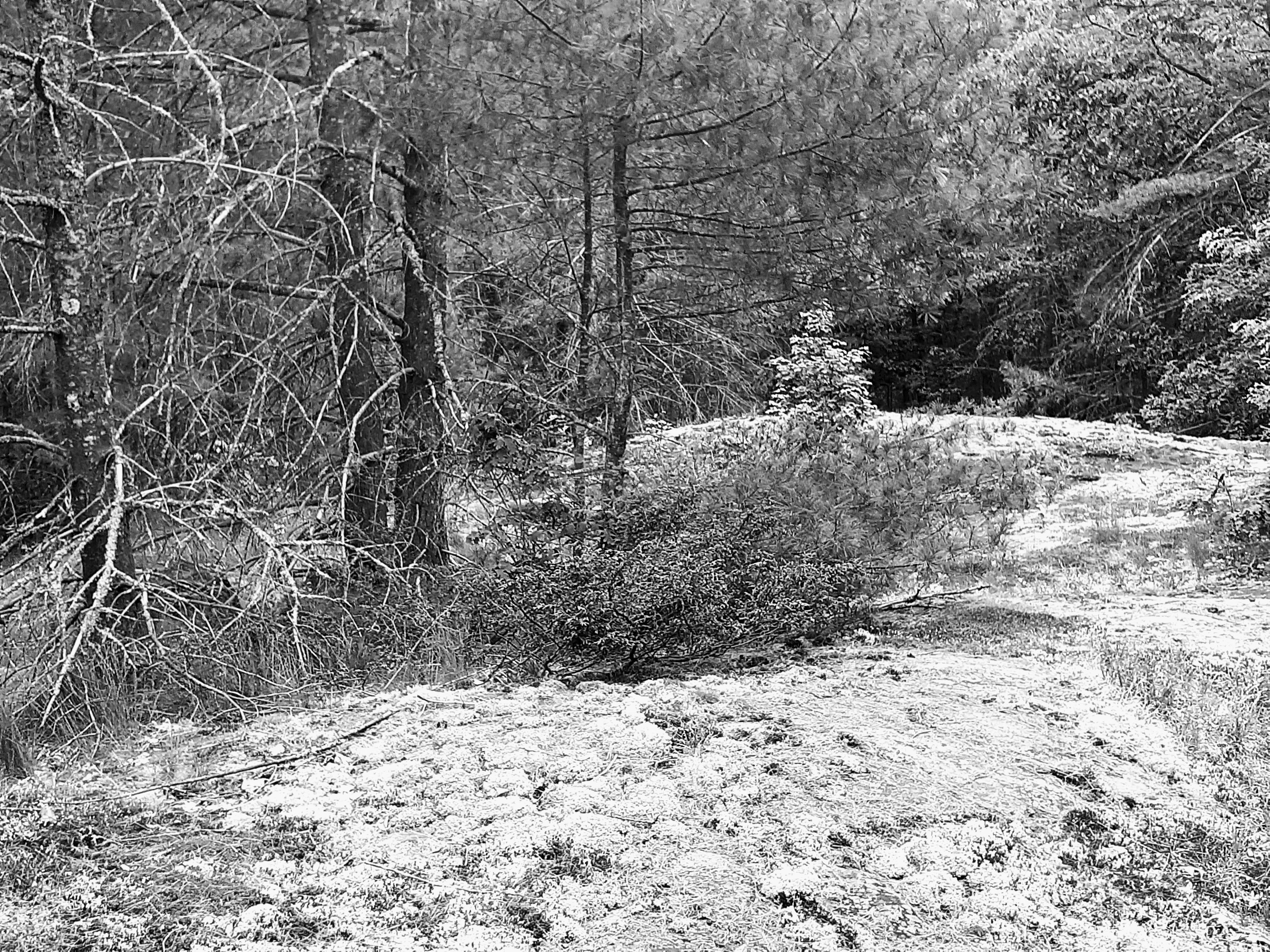
i. Field

The levelled field, churned and stilled—
black pools we hoard our water in;
the whole un-thing too brittle to bring
out of itself replies the gods
are used to: the ascetic
sandhills that slid ecstatic
            to the river;

pines of the stand that bowed,
in the eternal liturgy of winds,
to the black roll of the storm's mind;

cottages that flew apart when Heaven
whispered their names
in the total illuminations of its incisive
            tongue of static light...

we can no more contain these multitudes—
not of splinters, earths or seeds.

All winter we have gathered up
fresh leverage for new wagers—

now March comes.
It trails empty golden laurels
from its furrowed face,
to see what temple to the Animal
forgetfulness has rebuilt on the plain.

I go to meet my friend in town,
under this condition,
to sing and drink with him—
to ask him where he went and what,
if anything, became of him.
ii. Mirror

He has not drunk in years—this one
who leans against the boundary
            of my vision,

too much by three white stones to fall in,
so he leans back in slow oncoming tide:

his body one facsimile
retreating from its birth—
adjusts the knot that holds
the head above the rest.

The wrists, the darkness of his breast
sheened with fear and sandalwood;
no offering but water cast
along the face’s riverbed,

no oblation made without the heft
of ten years’ unprayed prayers,
and a request to pour out spirits
in the shadow of the town

heaved like a rock upon the flattened
            shoulder of the hill—

this one—I—go to meet my friend in March,
to drink with him and ask that he explain
this shape that things have taken

(he was there with me when I was young,
and knew my mother and my father separately):
explain the crosswise limbs to me,
beneath the sunken face
that leers unwarranted
from this head that looms
over the bloody office of the chest;

these legs, planted uncertainly, that stand
yet where they can; these hands
thrown wide and never met
save in Sistine proximities
of the grey emptiness of skies
            in March,

and yet press against the edge
            of this mirror’s pane;

head distended, passing like an omen
overhead, lunar, half-asleep and pregnant
with the cheapness of my lights,

and yet unable to forgive the flesh
it savagely assumed, or take in spirit
            my friend’s hand:

to take in body what is not expected—
that which is not spirit... I remember only
            his good face.
iii. Town

My friend has looked less wild,
or against the town’s old stations of transition—
their cold iron and fossil slats
and old brick stack adorned with four
            dead clocks—

looks wild if by a lazy comparison;
moves from machine gloom into March with me
past the homeless camp,

their crucibles in barrels;
blades beaten into bureaucratic paper
cinders waltzing zephyrs
            through the dust,

then down with me into the city
that clears its throat in brief thunders,
composing like a child
            with clumsy courtesy:

“My breath is unanswerable
copper vapour—the pink of flayed animals
on the jagged highway.

Understand my upward mobility—
the direction of my concrete pointing—
as a prophecy of death reversed,
of adventurous and fecund industry;
the obvious, inexplicable traffic
of light that rises in carnations’ blood,

so they stand as if held up by distant hands,
like plumage from my well-apportioned flowerbox,
the flagrant decoration of my congenital
            wounds.

Ask not who walks toward your house,
from the grey of evening, with flowers,
and into morning's solvent, spilled
in a fragile lattice
            on the dark porch.

I have half-recalled his name
and there are no more introductions left
to make—no more choked annunciations
can perform the trick for me before my vanity
sees me kneel as I have knelt before
in time before the hills were hills,
before the cottages were empty
and I was acquainted with the fear
and hunger that compels us each
            toward each other."
iv. Drinking

An hour at The European
and my friend has shed urbanities;
the shirt, the hair is loosened;
our wooden bowls brought down
            from lacquered shelves;

old accents redeployed
amid old enemies and moderates.

Even here, in this recalcitrant town,
depths muster us to make retort
by way of the crooked tongue
slung songwise down that narrow alley—
against the westward-shuffling
            of the commons.

Our confessions comprise a sharp
arthritis that quakes the marrow
in our tyrant's finger,
and will humiliate his angels
for the ribald diction of their innocence:

a dull percussive knife, sung
into the bellied sky where it is weak,
at the plexus of the spring and snowstorm—
sunny hinge—and in this way,
above the alley
            behind King Street,

grey March consternation draws
the sun's golden letter-blade
beneath its eye to let out rains.

Walls of yellow brick illume awake
and feel nothing when our shadows
            pass along them—

hedgerows rustle with our dozen
wild shapes in one blue evening—

a stranger is made visible, interloper
in precipitous opening salvoes.

I have gone to drink with my friend,
in desperate thunderstorms
            of March.
v. Singing

A matriarch draws Mosel wine
from a subterranean spring; acid
hiss and gurgle singing
            in the wineskins;

overabundance flowers
on the waxen countertop,
our stains begin the final leg that ends
in their internment in the dank wood
            of the table—

relics of out-sung desires—my friend
their constant subject: “Good lad, good lad,”
He knows how to sing through vapours
            risen from the well;

speaks well of women found there
in their want among the cups,
            the pulleys;

goes among the drunken brothers
disguised as one of them. They ask his name.
He says much but tells them next to nothing.

We drink and drink and make
            his face the clearer—

the distance in his tales of coming
over ocean rumours of his death,
pierced either by the brute facticity
of his unlooked-for arrivals,
seems unraveled from his tongue
until we can no longer hear
whose words are sloshing in
his wine-black sea of music,

nor who erects these palisades of teeth
along its ancient, blood-stained beach.
Our milkteeth crack and sputter
            through the verses.
vi. Morning

The drowning head contains the lake,
and all the lake contains
            the fullness of its name—

the swollen wave contains a dozen
schools of thought that never change;
loons knife jaggedly to track with them
            but stay the same.

The morning blindness and the migraine
swell the morning vessels till they bleed
in the percussing wind; bells bray
            around their hours;

sound full the distances between
their tolling tongues, enlaurel flocks
of agitated birds around the buzzed
            and brightened outskirts,

where, of a sunday morning, no one
dresses save the foreigner, who leaves our houses
glowing blue in morning mists
that shuffle undisturbed from up the river.

My friend has gone.
For now I do not see him,
either waking in the finery I thought
to set aside, nor smoking
with my brothers on the balcony.

He goes ahead with all my keys,
my vehicles, to set a feast
            along the road,

beneath an empty silo where Dutch families
laid well-apportioned fields, now wild.

He has set down a quilt my mother's
mother sewed for me—a ragged thing
            with three unequal sides—

and has even thought to bring the dregs
            that jangle cold and sweet,

and hold the light as if their light
were unseemed from the sun’s,
and in carnation red and auric white,
carries someway all of it
past dissolving riverbanks
that until now have hemmed-in
            our diminishment.
(cover photograph by author)
Holy wow.
Epic stuff